3 key elements that fuel branded mobile app effectiveness
2026-01-29
3 key elements that fuel branded mobile app effectiveness
By introducing a shopping credit in its mobile app, a retailer saw a 500% growth in sales.
In Hong Kong, where there’s nearly a 99.9% mobile penetration rate, building branded mobile apps have become a must for retailers to get ahead in the e-commerce scene.
Branded mobile apps, however, will only be effective if high adoption amongst consumers is established. To ensure high adoption, several experts have advised retailers about three key elements when building their branded mobile apps.
Loyalty, rewards programme
If there is one feature that retailers cannot miss when creating their own apps, that is integrating a loyalty and rewards programme.
“Rewards and loyalty programmes are very important features that require consumer adoption and keep consumers engaged with brands over time,” June Lau, research analyst at Euromonitor International-Hong Kong, told Hong Kong Business.
“Hong Kong people love rewards or any benefits that give them the edge and they are willing to adopt and use apps for the benefit. Long-term benefits and membership privilege is also an important feature that can retain consumers,” Lau added.
SHOPLINE Hong Kong Deputy General Manager Nick Chiu impressed upon the same insight, noting that integrating a loyalty programme in the app can help in client relationship management.
SHOPLINE, which is a commerce SaaS (Software-as-a-Service) and solution provider that helps merchants build their own omnichannel platform including branded mobiles apps, has an in-built loyalty programme which retailers can design. It is capable of creating different tiering structure levels.
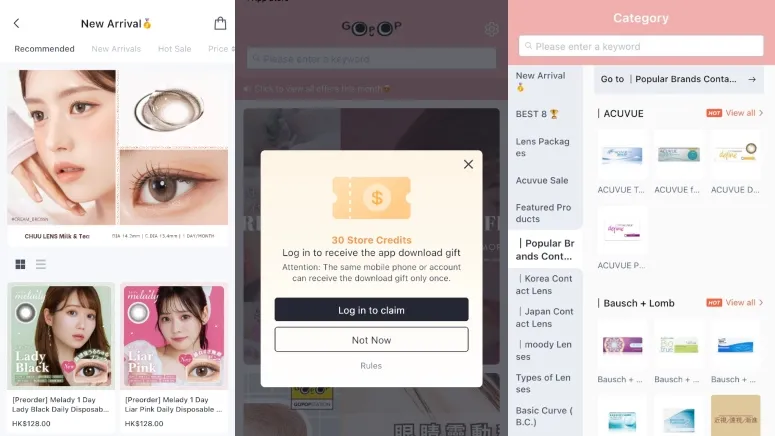
One of SHOPLINE’s merchants — GopopStation, which sells contact lenses — has seen the benefits of introducing rewards in a shop app.
During the Chinese New Year Season, GopopStation founder Vivian Wu said she sent out $18 red packet shopping credit, which symbolises fortune in Chinese, for customers who use the app.
“We have received exceptional interest in the [app] and saw a record 500% growth in sales during that period which is very significant,” she added.
Personalisation
Apart from rewards and discounts, consumers shop in mobile apps for a personalised shopping experience.
This is something mobile apps can provide since retailers can have access to personal data of their customers as opposed to partnering with third-party operators (3POs).
“3POs usually do not provide customer data back to retailers due to protections and privacy of personal data. However, these days its very crucial for businesses, through data, to understand more about consumer behaviours, make better business decisions, and tailor products and services according to customer preferences,” Lau said.
Echoing this sentiment, Chiu stressed that owning customer data allows merchants to devise marketing strategies and in turn, create a more personalised experience for their patrons.
A personalised experience could be in the form of targeted discounts, Chiu said.
Channels linkage
The effectiveness of a branded app is also determined by how seamlessly it facilitates merchant operations, which is why Lau and Chiu advised retailers to ensure that their mobile platform is linked to their other channels whether it be a website or an offline store.
By doing this, Chiu said retailers can give consumers the option to fulfil their orders the way they want to. SHOPLINE also offers this feature to its partner merchants.
“You can use the app to make the purchase but consumers can choose either to pick up their order from offline stores,” he said.
Lau said such a feature is important, especially for brands involved in the food services industry. “They should provide online pickups, or takeaway, or maybe online reservations,” she said.
Wu, for her part, said having her app integrated with her website helps her reduce maintenance costs. “I don’t need to upload new products to the website and then do the same thing to the app,” Wu said.
Maintaining a mobile app
Apart from updating the product roster, Wu said the only maintenance work she does for her GopopStation’s app is updating its design and visuals.
“I only spend three hours per week maintaining the app,” Wu said — just to make sure there is an easy-to-use layout for her customers. “We have put in a search option as well as categories to help customers choose from our over 3,000 lenses.”
Meanwhile, Chiu said SHOPLINE helps its partner merchants maintain their apps not only on the technical side like fixing bugs, but also incorporating changes based on user feedback.
Knowing customers’ wants and needs generally is important when building an app altogether, said Lau.
“In order to ensure that mobile apps are relevant and valuable to customers, businesses need to understand the core functions and features needed by customers,” she said.